Dr. Jen Lisy.

← Home  /  AI for Community

For community groups & the general public

Everyone can use AI. I help you avoid the pitfalls.

I help people use it in ways that keep their data safe, and I welcome skeptics and early adopters alike. I give talks and open Q&A sessions for business owners, local officials, libraries, parent groups, and civic organizations, no jargon, no sales pitch, and no assumption that you’ve ever opened one of these tools. Then I stay for the questions, which are always the best part.

Where I usually start

It started with a robot vacuum.

My dad is 78 years old. A while back he wanted one of those robot vacuum cleaners and couldn’t make sense of the reviews, so he asked ChatGPT. It walked him through the differences, asked what his floors were like, and helped him land on one.

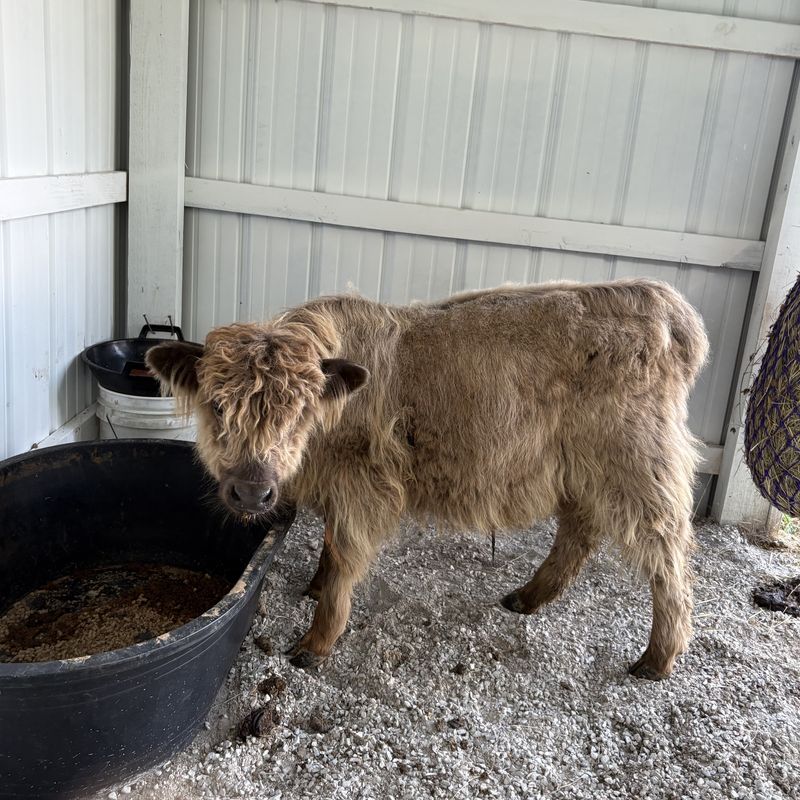
Now he uses it for every purchase he makes. This year he bought Highland cows, the shaggy ones with the horns. He used AI to work out what the cows would need, what to build their shelter out of, where to source materials, and what to have ready before they arrived. It made a real difference.

I tell this story because people expect an AI talk to be about robots taking jobs, and it’s really about a 78‑year‑old man asking better questions than he could have asked alone. He’s still the one deciding. He’s still the one who has to look at the cows.
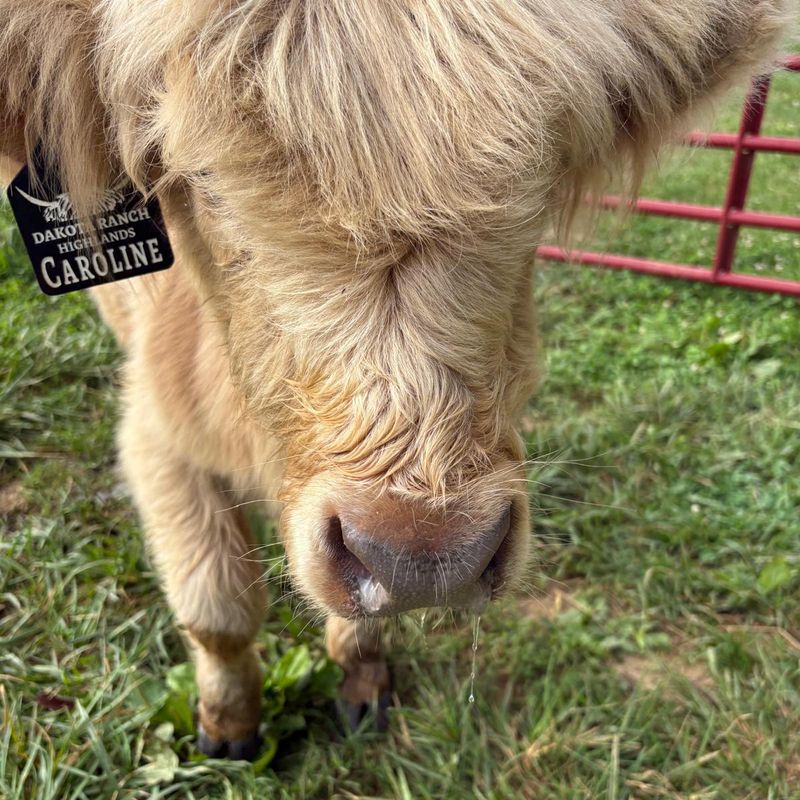
Caroline, a Highland cow with a Dakota Ranch Highlands ear tag, grazing
Boz, a Highland cow, feeding inside the shelter Dr. Jen Lisy's father built

Caroline and Boz, and the shelter he researched, sourced, and built.

You don’t have to be the most curious person in the room about AI. You just have to find your people, the ones already playing with it, so you can figure out what’s worth your time.

Session formats

Four ways to run it

All adapt to your group’s size, time, and starting point. Sessions run 45–90 minutes, in person or virtual, with Q&A always included.

What AI Is, and What It Isn’t

How these tools work, why they confidently get things wrong, and what “hallucination” actually means. The foundation for everything else.

45 min + Q&A

AI at Work, Without the Hype

For business, nonprofit, and civic audiences: useful applications, honest limitations, and the privacy questions to settle before you adopt anything.

60 min + Q&A

AI in Your Child’s Classroom

For parents and families: what schools are actually doing, what to ask at conferences, and how to talk with your kids about it.

60 min + Q&A

Ask Me Anything About AI

Open, moderated Q&A: no slides, no agenda, no question too basic. Best for groups that would rather talk than listen.

45–90 min

Who these are for

Where I’ve done this work.

I’ve presented at all five of Ohio University’s regional campuses to audiences of small business owners, local government officials, retirees, classroom teachers, and everyone in between. More recently I joined a Q&A for a wealth management group and spoke at a women in marketing event in Ohio on using AI to grow a business.

Small business owners

Practical uses, real limitations, and the privacy questions worth asking before you put client information into anything.

Local government & civic groups

Officials and boards making decisions about tools they were never trained on, with public accountability attached.

Professional & membership groups

Chambers, Rotary, industry associations, and networking groups wanting a session members will discuss afterward.

Parent & family groups

PTOs and family nights circling the same worries about cheating, screens, and what this means for childhood.

Libraries & retirees

Adult programming for patrons meeting AI for the first time. Some of the best questions I get come from these rooms.

School boards

Board members who have to vote on AI policy without a background in it, and want to vote well.

What people are saying

From the room.

Responses from the Ohio University Regional Higher Education workshops, to the question: what topic content was most useful to you?

“Thank you for an excellent workshop on generative artificial intelligence. You presented the material with both technical authority and clarity, which made the session effective and easy to follow.”

Workshop participant

“The presenters [Jen Lisy and Basil Masri Zada] know AI and were very engaging and informative. You are lucky to have them.”

Workshop participant

“I especially enjoyed the basics of AI use and learning about the different ways AI can assist with my work tasks.”

Workshop participant

“What seems most useful is the easy use of AI and its unbelievable power and benefits. I have an associate degree in computer science. I’ve been retired for 12 years now and had no idea how powerful and easy this new technology is to use.”

Workshop participant

The questions I get every single time

You are not the only one asking.

Where is the information coming from, and can I trust it?

These systems learn patterns from enormous amounts of text, and they can’t reliably tell you where a particular answer came from. Treat what comes back as a draft, never as a source. You are the human in the loop, and that job doesn’t transfer.

Should our organization be worried about privacy?

Assume anything typed into a free consumer tool may be used to improve that tool unless the terms say otherwise. If you handle client, patient, student, or donor information, settle that question before anyone picks a product, not after. If you’re on a paid or business tier, check the account’s data or privacy settings and turn training off: most paid plans let you opt out, which means the tool can’t use what you type into it to train future models. It’s usually off by default on business plans and on by default on free ones, so check rather than assume.

Is AI going to replace teachers? Or my job?

It will change which parts of a job take the most time long before it replaces anyone. These tools handle drafting, summarizing, and generating options. The parts requiring judgment, relationship, and accountability are the parts they can’t do, usually the parts that matter most.

How do teachers know if a student used AI to cheat?

Detection software is unreliable and produces false accusations, disproportionately against multilingual writers and neurodivergent students whose natural writing patterns (formulaic phrasing, unusual sentence rhythm) get flagged as “AI” by these tools. What works is assignment design plus clear, assignment‑level policy, and asking students to reflect openly on how they used these tools instead of driving the use underground.

Is it safe for my child to use these tools?

It depends heavily on which tool. Education platforms with district agreements handle student data very differently from consumer chatbots, and most have age minimums families never see. I walk groups through what to ask your school.

Won’t people stop thinking for themselves?

That risk is real and it’s the one I take most seriously. The answer is learning when to use these tools, when not to, and how to evaluate what comes back, a teachable skill, not an instinct. Pretending the tools don’t exist guarantees people use them badly.

What if I just don’t want to use AI?

That’s a legitimate position and you’re welcome in the room. AI is not one size fits all: your field, context, and purpose all matter. I only ask for a real rationale rather than a reflex, and a willingness to hear what others have found. Some of my best conversations have been with skeptics, and I’ve changed my own thinking because of them.

We have no budget for this. Where do we start?

With shared understanding and a written policy, which cost nothing. Most strong tools have free tiers, and a group that agrees on what it wants from AI will spend far less than one that buys first and asks later.

How much does a session cost?

Sessions start at $250. Library, nonprofit, and civic‑group rates are different from corporate ones, and travel is billed separately. Tell me about your group and I’ll give you a straight number before you have to convince anyone else.

Bring the conversation to your group.

Tell me who your audience is and what’s prompting the ask.

Reach out →

Stay in touch

Get new posts and free resources by email.

No more than a few times a month. Unsubscribe anytime.